
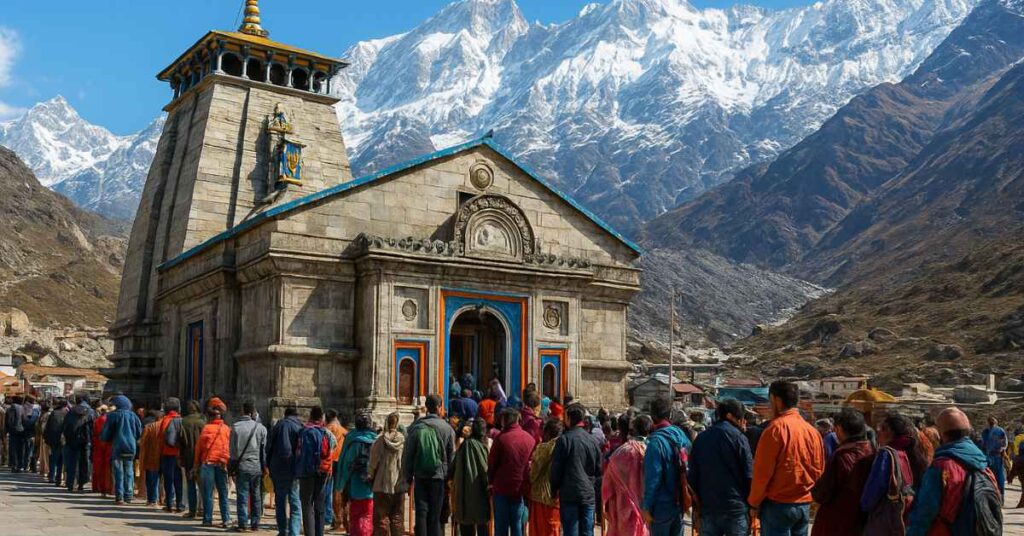
Explore 9 fascinating facts and spiritual insights about Kedarnath Temple—its legend, architecture, darshan tips & pilgrimage guide for seekers of divine Shiva-power.
Key Information at a Glance
- Timings: to VisitYear-round (check festivals)
High in the Garhwal Himalayas of Uttar
- Location: Kedarnath, Rudraprayag district, Uttarakhand, India
Deity: Lord Shiva in the
Quick Information
| Detail | Information |
|---|---|
| Location | Kedarnath |
| Timings | See detailed timings below |
| Online Booking | Available (see guide) |
| Entry Fee | See pricing section |
| Best Time to Visit | Year-round (check festivals) |
High in the Garhwal Himalayas of Uttarakhand stands the sacred Kedarnath Temple, one of the holiest abodes of Lord Shiva. Nestled amid snow-capped peaks, this ancient shrine carries centuries of legend, devotion, and spiritual energy. Whether you’re planning the pilgrimage or simply seeking to understand its deep significance, here are nine key facts and spiritual insights to guide you on your journey.
Quick Facts
- Location: Kedarnath, Rudraprayag district, Uttarakhand, India
- Deity: Lord Shiva in the form of the self-manifested Jyotirlinga
- Relinquishable: One of the sacred “Chota‐Char Dham” & one of the 12 Jyotirlingas.
- Altitude & Terrain: High mountain region, accessible via trek/road depending on season
- Best Visiting Time: Summer to early autumn (May to October), as winter months bring heavy snow and temple closure
1. Legend & Mythology
According to Hindu tradition, after the great war in the Kurukshetra, the Pandavas sought Lord Shiva’s forgiveness for the bloodshed. Shiva, unwilling, took the form of a bull and hid at this place; when found, he dived into the earth, leaving his hump behind — the shrine marks that spot.
Visiting Kedarnath thus symbolises seeking Shiva’s grace and forgiveness.
(This legend is part of the larger Char Dham lore.)
2. Spiritual Significance
As one of the 12 Jyotirlingas (shrines of Shiva in his radiant form), Kedarnath holds immense significance for devotees of Lord Shiva.
The mountainous setting further amplifies the ambience of austerity and surrender—pilgrims leave the comforts of the plain and climb towards the Divine.
3. Architecture & Setting
The temple stands amid dramatic Himalayan terrain—valleys, rivers, peaks. Its architecture blends old Himalayan-stone temple styles with elements adapted to alpine weather.
The physical challenge of reaching it heightens the spiritual experience: the climb itself becomes part of the discipline of pilgrimage.
4. Access & Darshan Tips
- Trekkers and pilgrims often enter via Sonprayag/Gaurikund-to-Kedarnath route (about 16 km on foot).
- There are also seasonal road/ropeway links depending on infrastructure and weather (note: high altitude, unpredictable conditions).
- Dress modestly; prepare for changing weather conditions (cold, wind).
- Darshan queues can be long during peak season—early arrival helps.
- Respect temple rules and the sanctity of the site.
5. Seasonal Insight & Best Time to Visit
The temple is accessible typically from late April/early May until November (depending on snow and weather). Winters bring closure due to heavy snowfall and inhospitable conditions.
If you go during the open season, aim for May‐June or September when the weather is milder and the scenery spectacular.
6. What to Experience & See
- The sanctum housing the lingam of Lord Shiva — the point of deepest darshan.
- Surrounding peaks, especially during dawn and dusk, offer ethereal views.
- The Ganga/Alaknanda river valleys nearby add a sacred context of flowing tirtha-waters.
- Local flora/fauna and mountain silence help foster inner reflection.
7. Pilgrim Mindset & Spiritual Preparation
- Approach Kedarnath not just as a sightseeing destination but as a pilgrimage:
- Leave behind everyday concerns and open your heart to the Divine.
- Use silence, the climb, the nature, and the temple atmosphere as supports for introspection.
- Carry minimal baggage—physically and mentally—and focus on surrender, offerings, and gratitude.
8. Sustainability & Mindful Pilgrimage
- Given the fragile mountain ecosystem and heavy pilgrim loads, it’s important to travel responsibly:
- Avoid littering; carry back all waste.
- Respect local customs, minimise noise, respect nature.
- Choose local guides and services when feasible to support the region.
The setting of Kedarnath reminds us that pilgrimage places are part of Earth’s sacred web, not isolated “tourist spots”.
9. Integration With Other Sacred Destinations
- Kedarnath is often visited as part of the Himalayan pilgrimage circuit. It connects spiritually with other major shrines such as Badrinath Temple, Yamunotri and Gangotri as part of the Chota-Char Dham.Kedarnath Temple
If you are planning a broader pilgrimage, Kedarnath is a key jewel in that chain.
FAQs
- Q1: Is Kedarnath open year-round?
A1: No. It’s usually open in the late spring to autumn (May–October). In winter heavy snow forces closure.
Q2: Can beginners do the trek?
A2: While the route is manageable for many, you must be prepared for high-altitude terrain, basic facilities, and variable weather. Fitness and advance planning help.
Q3: What offerings or rituals are common?
A3: Devotees often offer bilva leaves, light lamps, chant Shiva mantras, and circumambulate the sanctum. Consulting temple authorities on ritual timings is wise.
Q4: Are there lodging options nearby?
A4: Yes, basic guest houses and dharamshalas exist at Kedarnath and en route, though booking ahead is advised during peak season.
Q5: How do I respect local customs?
A5: Dress modestly, avoid loud talking in the temple zone, remove shoes, and follow instructions of temple staff/priests.Kedarnath Temple
The Kedarnath Temple offers far more than a visit to a holy site—it presents a profound journey into devotion, mountain austerity, and the vastness of Shiva’s presence. If you approach it with reverence, readiness, and respect, you’ll return not only with photos, but with deeper memories, inner quiet, and spiritual uplift. May your pilgrimage be safe, sacred and transformative.
Usefull Links
- Indian Temple Pilgrimage: Divine Architecture, Legends & Pilgrims
- Most Visited Temples in India (Top 10)
- The Timeless Spiritual Significance of Hindu Temples
- 108 Divya Desam Temples List: District-Wise Location & Pilgrimage App
- Hindu Temple Architecture: Explore India’s Temple Styles
- official information on Kedarnath Yatra, registration, and weather updates.
- temple opening dates, rituals, and management details.
Author Box
- Written by Gokshetra Blog Team | Gokshetra.com – Your Trusted Source for Hindu Temple Pilgrimages
Important Tips for Visitors
- Remove footwear before entering the temple premises. Shoe storage is usually available near the entrance.
- Photography may be restricted inside the main sanctum. Check with temple authorities before clicking pictures.
- Wear modest, traditional clothing — most temples require covered shoulders and knees.
- Arrive early morning for a peaceful darshan experience — most temples are less crowded before 8 AM.