
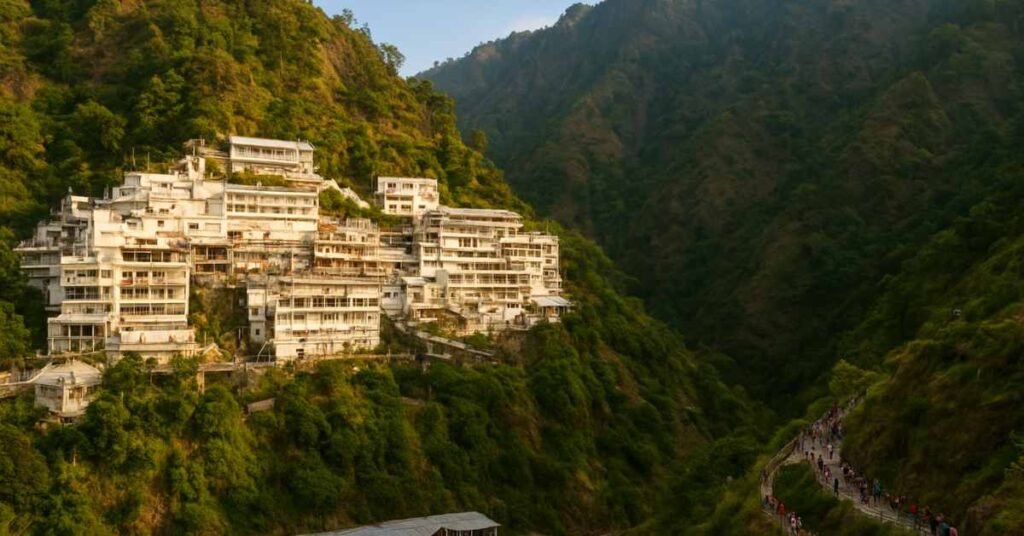
Vaishno Devi Temple Explore the sacred Vaishno Devi Temple in Katra — complete history, trek details, rituals, tips & pilgrimage insights for your spiritual journey.
Nestled high in the Trikuta Mountains of Jammu & Kashmir, the Vaishno Devi Temple calls to millions of devotees every year. Also known as “Mata Vaishno Devi”, the shrine is a powerful Shakti Peeth and a centre of intense consciousness, offering not just darshan but a transformative pilgrimage experience. In this blog we’ll cover its sacred legend, the trek, key rituals, pilgrimage logistics from Tirupati region, FAQs and tips to make your journey seamless and spiritually fulfilling.
Key Information at a Glance
- Timings: Guide
DetailInformation
LocationVaishno
TimingsSee detailed timings below
Onli - Location: Katra, Reasi District, Jammu & Kashmir, India
Significance: One of the 10
Quick Information
Also Read: Nara Drishti Nivarana Remedies Powerful Chanting Mantra | Vaishno Devi Temple Jammu Timings Opening Closing Darshan | Vaishno Devi Yatra Current Status: Crowd, Waiting Time Guide
| Detail | Information |
|---|---|
| Location | Vaishno |
| Timings | See detailed timings below |
| Online Booking | Available (see guide) |
| Entry Fee | See pricing section |
| Best Time to Visit | Year-round (check festivals) |
- Quick Facts
- Deity: Goddess Vaishno Devi (a form of the Divine Mother)
- Location: Katra, Reasi District, Jammu & Kashmir, India
- Significance: One of the 108 Shakti Peethas; among India’s most-visited pilgrimage sites.
- Annual Footfall: Millions of devotees; during major festivals the numbers surge.
- Best Time to Visit: March-June (pleasant weather), also October-November; avoid peak monsoon.
- Access Point: Katra town — from there trek, pony, palanquin or helicopter options.
- Focus Keyphrase Repetition: Vaishno Devi Temple (used in intro, quick facts…)
- History & Legend
- Sacred Legend
- According to lore, the Divine Mother took the form of an unmarried virgin (Kanya) and undertook meditation in the Trikuta hills to escape the demon Bhairav Nath. He pursued her, and when she finally granted darshan, he chased and caught up near the cave shrine. She granted him darshan, but then he was slain and his head landed at a site now known as “Bhairav Grah”. This spot is now part of the pilgrimage route. The legend underscores the Mother’s power, protection and transcendence of fear.
- Development Through Time
- While the cave shrine is ancient, structured facilities developed over centuries. The modern pilgrimage infrastructure—pathways, ropeways, facilities in Katra—have grown significantly. The shrine today ranks among India’s most-visited temples.
- Pilgrimage & Trek Details
- The Yatra Route
- Start Point: Katra town (approx elevation 700 m).
- Trek Distance: ~12 km one-way (Katra to Bhavan) along a dedicated path.
- Modes: Walk/trek, pony, palanquin, or helicopter (for Bhavan to Sanjichhat) depending on budget & fitness.
- Terrain & Time: Mountainous terrain; average walk 4-6 hours up; descent quicker.
- Key Stops: Ban Ganga (first rest point), Charan-Paduka (foot print of the Mother), Bhairav Grah (end of trek), the final cave shrine.
- Carry minimal baggage, water, some snacks, light jacket.
- Rituals & Darshan
- On reaching the cave shrine you pass through the inner sanctum where the pindi of Mata is enshrined (the differentiating rock manifestation).
- After darshan, many also visit Bhairav Grah to offer prayers, as per tradition.
- Different offerings: fresh flowers, red cloth, sweets. Outside the cave, prasad shops and charity counters line the path.
- Spiritual Significance & Why Visit
- The Vaishno Devi Temple offers an immersive pilgrimage, not just a visit: the physical trek itself becomes meditation in motion.
- As a Shakti Peeth, the shrine symbolises the cosmic feminine energy, making it a powerful centre especially for those seeking kripa, courage, protection and spiritual renewal.
- For devotees coming from places such as Tirupati region, linking this yatra can add a North–South pilgrimage unity, offering diverse dimensions of devotion (from Vishnu-temple to Shakti-temple).
- The environment of the hills, the sacred path, the collective chanting of pilgrims all contribute to a heightened inner state of contemplation and surrender.
- How to Visit from Tirupati (Your Location)
- Travel to Jammu & Kashmir:
- Fly from nearest airport (likely Hyderabad or Tirupati) to Jammu (Satwari Airport) via Delhi or other hub.
- Alternatively train/bus to Jammu.
- Jammu → Katra:
- From Jammu station or airport, take taxi or bus (~50 km) to Katra town.
- Overnight stay in Katra recommended for early start.
- Start the Yatra:
- Early morning (4-5 am) start from Katra to trek to the shrine to avoid crowds and enjoy calm.
- Wear good trekking shoes/sneakers, carry light backpack, water.
- Stay Options:
- Katra offers many budget/standard hotels. At Bhavan area (near cave) there are dharamshalas, but trek-back same day is common.
- Return:
- Descend, refresh in Katra, proceed back to Jammu then onward to your home.
- If combining with Tirupati pilgrimage:
- You might plan a two-temple circuit: Sri Venkateswara Temple (Tirupati) → Vaishno Devi (Katra) to experience both Divinity of Vishnu and Shakti.
- Tips & Practical Advice
- Visit on non-peak days if possible (avoid major festivals like Navratri when crowd is intense).
- Weather: Mountain weather can change — carry a light jacket or rain-shell in monsoon season.
- Acclimatise: Although altitude is moderate (~1650 m at Bhavan), the walk is steep—go at your pace.
- Stay hydrated, but avoid heavy meals before trek.
- Respect shrine discipline: modest dress, no leather goods allowed in certain stretches.
- Avoid being overly burdened by offerings—simple devotion is accepted.
- If you have mobility constraints, consider pony or palanquin hire early in the morning before demand peaks.
- FAQs
- Q1: Is the trek to Vaishno Devi open year-round?
A: Yes, the trek is operational throughout the year. However, extreme winter or heavy snow can cause temporary delays. It’s best to check local advisory ahead. - Q2: How crowded is the Vaishno Devi Temple pilgrimage?
A: Very crowded—especially during Navratri and summer holidays. Millions visit annually. Arriving early in the morning reduces wait time. - Q3: Can I use helicopter service for the trek?
A: Yes, from Katra to Sanjichhat (just before the cave) helicopter service is available for those who prefer less physical exertion. Plan and book ahead. - Q4: What should I wear and carry?
A: Comfortable trekking shoes, modest clothes (no shorts/ sleeveless in shrine), small backpack, water bottle, light jacket. Avoid large luggage. - Q5: How long does the entire yatra take?
A: Typically 1 full day from Katra—morning start, reach Bhavan/shrine by afternoon, return to Katra by evening. For relaxed pace you may stay overnight. - A pilgrimage to the Vaishno Devi Temple is more than a visit—it is a journey of surrender, devotion and internal awakening. As you tread the sacred path from Katra, ascend the Trikuta hills, reach the cave where the Divine Mother abides and return renewed, you partake in an ancient ritual of transformation. For all devotees from Tirupati and beyond, linking this yatra with your spiritual practice offers a profound dimension of the Mother’s grace. May your steps be steady, your heart open, and your devotion deep. Jai Mata Di!
Usefull links
- covers many major temples and fits well as a “See also” link. gokshetra.com
- relevant especially since you are based in Andhra Pradesh and this ties regional context. gokshetra.com
- supports deeper context on architecture which you touch on in the blog. gokshetra.com
- relevant since you mentioned Tirupati in the blog; good internal link. gokshetra.com
- run by the Shri Mata Vaishno Devi Shrine Board. maavaishnodevi.org+1
- Wikipedia entry for quick historical & factual overview:
Author Box
- Author: Gokshetra Blog Team — Alpha v4
About: Dedicated to exploring Hindu temples, sacred sites and pilgrimage journeys across India with spiritual depth and factual accuracy.
Important Tips for Visitors
- Visit during weekdays for shorter queues. Weekends and festival days see significantly higher footfall.
- Photography may be restricted inside the main sanctum. Check with temple authorities before clicking pictures.
- Wear modest, traditional clothing — most temples require covered shoulders and knees.
- Carry a valid ID proof — some temples require it for special darshan or accommodation booking.