
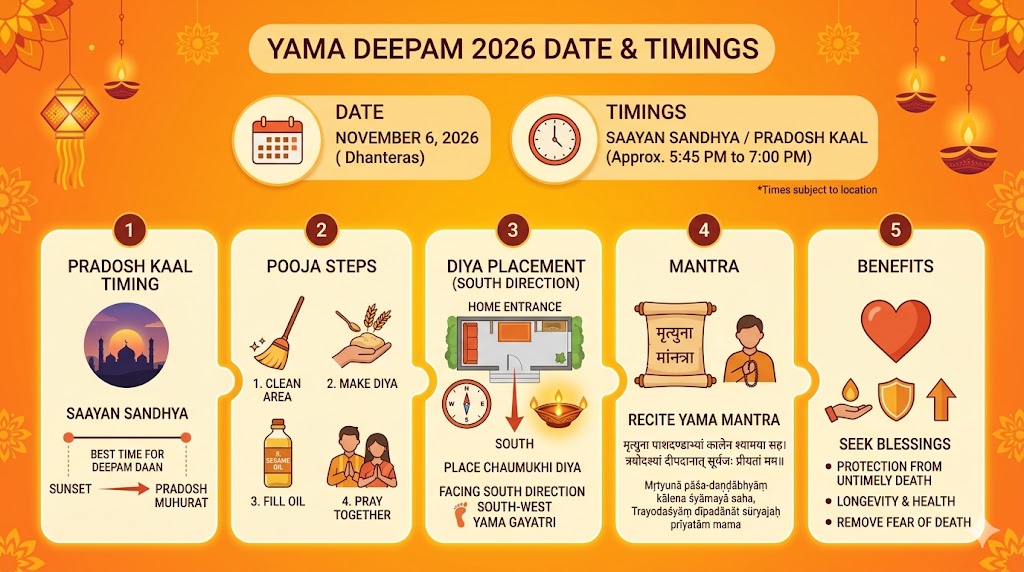
Yama Deepam date and timings are extremely important for devotees observing this sacred ritual during the Diwali festival period. Yama Deepam, also known as Yamadeepam, is performed to honour Lord Yama, the god of death, and to seek protection from untimely death. Therefore, lighting the दीप at the correct time is considered highly auspicious and spiritually powerful. This ritual usually falls on Naraka Chaturdashi, one day before Deepavali, and devotees light a lamp outside their homes during the evening twilight. Moreover, following the proper pooja vidhi, mantra chanting, and exact timing enhances the benefits of the ritual. In this detailed guide, you will find accurate Yama Deepam date, ideal timings, pooja procedure, powerful mantras, and essential do’s and don’ts. Whether you are performing it for the first time or continuing family tradition, this guide ensures you follow the ritual correctly for maximum spiritual benefit.
Yama Deepam Date and Timings
Yama Deepam Date in India
Yama Deepam is observed on Naraka Chaturdashi, which falls one day before Deepavali.
- Tithi: Krishna Paksha Chaturdashi (Ashwayuja/Kartik month)
- Observed: Evening before Diwali
For reference:
In recent years, it usually falls in October or November, depending on the lunar calendar.
Exact Yama Deepam Timings
Performing the ritual at the correct time is crucial.
Ideal Time (Pradosh Kaal)
Evening Twilight: Approximately 5:30 PM – 7:00 PM
This period is called Pradosh Kaal, which is considered the most auspicious time.
Key Timing Insight
- The lamp must be lit after sunset
- Avoid performing it too late at night
Therefore, aligning with sunset ensures maximum spiritual benefit.
What is Yama Deepam? (Spiritual Significance)
Yama Deepam is a ritual dedicated to Lord Yama.
Importance
- Protects from untimely death
- Removes fear and negative energies
- Brings peace to ancestors
Moreover, scriptures mention that lighting this lamp guides souls and protects family members.
Yama Deepam Pooja Procedure (Step-by-Step)
Preparation
- Clean the entrance of your home
- Use a small clay lamp (diya)
- Fill with sesame oil or ghee
Pooja Steps
- Place the lamp outside the house, preferably facing south direction
- Light the lamp during Pradosh Kaal
- Offer water and flowers
- Fold hands and pray sincerely
Important Rule
The lamp should remain lit for as long as possible.
Yama Deepam Mantra (Powerful Chant)
Chant this mantra while lighting the diya:
“Mrityuna Pasha Dandabhyam Kalena Shyamaya Saha
Trayodashyām Deepadanat Suryajaḥ Pritim Gacchati”
Meaning
This mantra pleases Lord Yama and protects devotees from premature death.
Do’s and Don’ts for Yama Deepam
Do’s
- Light the lamp at the correct time
- Use sesame oil for better results
- Place the lamp outside the house
Don’ts
- Do not keep the lamp inside the house
- Avoid lighting before sunset
- Do not ignore direction (south-facing is important)
Benefits of Performing Yama Deepam
- Protection from accidental death
- Blessings of longevity
- Peace for ancestors
- Spiritual cleansing of home
Thus, this simple ritual holds deep spiritual significance.
Common Mistakes to Avoid
- Lighting diya at wrong time
- Using electric lamps instead of traditional diya
- Ignoring mantra chanting
Therefore, following proper method ensures effectiveness.
Frequently Asked Questions (FAQ)
1. What is the exact Yama Deepam date every year?
It falls on Naraka Chaturdashi, one day before Diwali, based on the lunar calendar.
2. What is the correct time for Yama Deepam?
The ideal time is during Pradosh Kaal (after sunset).
3. Where should I place the Yama Deepam?
Place it outside your house, facing south direction.
4. Which oil is best for Yama Deepam?
Sesame oil is considered most auspicious.
5. Can I perform Yama Deepam indoors?
No, it should always be placed outside the home.
6. Is mantra chanting compulsory?
While not mandatory, chanting enhances the ritual’s benefits.
External Official Links
https://www.drikpanchang.com/
https://www.iskcon.org/
Important Tips for Visitors
- Be prepared for long queues and allocate extra time for darshan during festivals.
- Carry sufficient cash — ATMs near temple towns may run out during peak festival periods.
- Check the exact festival dates on the official temple website as lunar calendar dates may shift.
- Book accommodation well in advance — rooms fill up quickly during festival season.
Official Resources

Go Kshetra covers 1,600+ Hindu temples across 28 states. Content sourced from official temple websites and first-hand visits. About our editorial process