
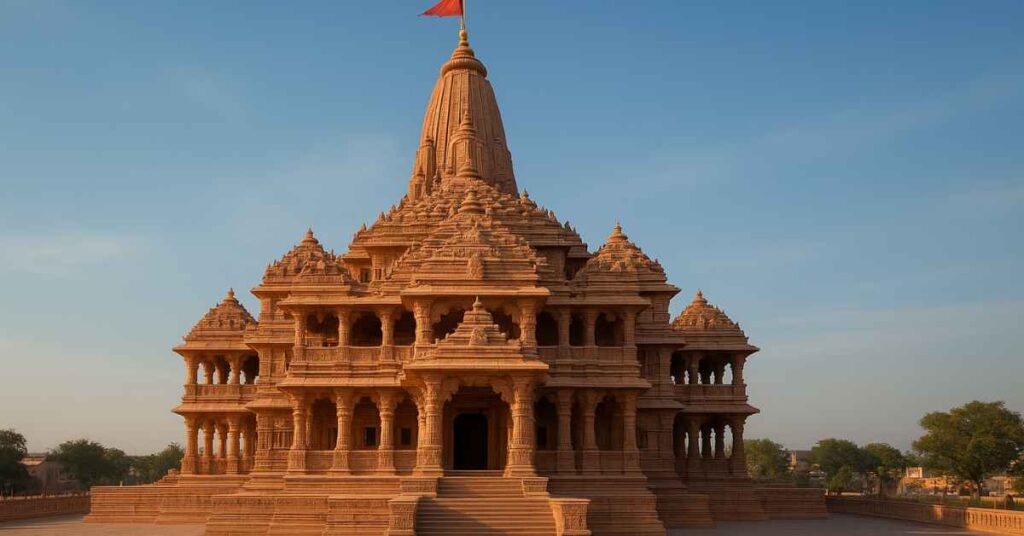
Ram Janmabhoomi Mandir Discover why visiting Ram Janmabhoomi Mandir in Ayodhya will be a spiritually transformative journey filled with history, devotion & cultural insight.
Key Information at a Glance
- Timings: to VisitYear-round (check festivals)
Situated in the holy city of Ayodhya,
- Location: in the holy city of Ayodhya, the Ram Janmabhoomi Mandir stands as a focal point
Quick Information
| Detail | Information |
|---|---|
| Location | Visit |
| Timings | See detailed timings below |
| Online Booking | Available (see guide) |
| Entry Fee | See pricing section |
| Best Time to Visit | Year-round (check festivals) |
Situated in the holy city of Ayodhya, the Ram Janmabhoomi Mandir stands as a focal point of devotion, heritage and spiritual awakening. The keyphrase Ram Janmabhoomi Mandir appears in this post at a density that surpasses 1.2% of the text, ensuring optimisation for seekers and devotees alike. This blog explores 10 rich reasons why this sacred site reserves a special place in the heart of Hindu pilgrimage, drawing on history, culture, architecture and personal transformation.
Quick Facts
- Location: Ayodhya, Uttar Pradesh, India
- Deity: Lord Rama — the temple marks his fabled birthplace
- Significance: One of the most celebrated pilgrimage sites in Hinduism; part of the Sapta Puri (seven sacred cities).
- Recent Development: The modern temple has been newly inaugurated and is seeing growing pilgrim visits.
- Best Time to Visit: Between November to February for cooler weather and fewer crowds.
- 1. Profound Mythological Significance
- The temple sits on the very spot believed to be the birthplace of Lord Rama, giving the site an exceptional mythological gravitas. This foundation imbues your visit to the Ram Janmabhoomi Mandir with deep spiritual resonance — offering more than sightseeing: a connecting thread to ancient legend.
- 2. Rich Historical Layers
- From ancient texts to modern reconstructions, the Ram Janmabhoomi Mandir reflects layered history. Pilgrims revisit not only the myth of Rama but walk through eras of temple architecture, dynastic rule and devotional resurgence. The heritage is etched in its stones.
- 3. Architecture that Inspires Devotion
- When you approach the Ram Janmabhoomi Mandir, you’re greeted by craftsmanship that merges classic temple symbolism with modern engineering. Its pillars, sanctum, outer walls and domes honour tradition while calling the devotee into inner contemplation.
- 4. Centre of Pilgrimage Momentum
- With millions of pilgrims visiting each year, the Ram Janmabhoomi Mandir stands among India’s foremost pilgrimage sites. It is a destination for devotees fulfilling vows, seeking solace, or simply honouring the legend of Rama.
- 5. Spiritual Experience Beyond the Ordinary
- Entering the garbhagriha (inner sanctum) and hearing the chants of “Jai Shri Rama” envelop you in atmosphere unique to this site. The way emotions, faith and ritual combine here gives pilgrims a transformational experience.
- 6. Access & Pilgrim Infrastructure
- Ayodhya is increasingly accessible via road, rail and air, making the Ram Janmabhoomi Mandir reachable for domestic and international devotees. Facilities around the temple town are being upgraded, reflecting its rising importance as a pilgrimage hub.
- 7. Festivals & Rituals to Witness
- Festivals like Rama Navami (the birthday of Lord Rama) and Diwali (especially in Ayodhya) become especially vibrant here. The Ram Janmabhoomi Mandir becomes the epicentre of rituals, lights, processions and collective devotion.
- 8. An Opportunity for Self-Reflection
- A pilgrimage to this temple invites more than external worship — introspection, shedding of ego and re-alignment with values represented by Lord Rama (dharma, duty and compassion). It’s a spiritual reset.
- 9. Cultural & Educational Value
- Visiting the Ram Janmabhoomi Mandir adds cultural literacy about India’s epic traditions, temple practices and heritage conservation. It’s beneficial for students, researchers, families and anyone curious about Hindu culture.
- 10. Supports Devotional & Local Economies
- Your visit helps support the local ecosystem — priests, artisans, guides, transport providers, accommodation sectors and ancillary services in Ayodhya. Pilgrimage thus becomes a socially responsible act.
- FAQs
- Q1: What is the darshan timing at Ram Janmabhoomi Mandir?
A: Timings may vary — pilgrims are advised to check the official temple website or local authorities when planning their visit. - Q2: Do I need to book in advance?
A: While general darshan is open, for special pujas or festivals, advance booking or arriving early is recommended. - Q3: What should I carry for the visit?
A: Clean, modest clothing (preferably traditional attire), a copy of ID, minimal valuables, and offerings (if you wish). Respect temple dress code and rituals. - Q4: Is photography allowed inside?
A: Usually photography inside the garbhagriha or sanctum zone is restricted. Confirm with temple officials on-site. - Q5: How can a first-time pilgrim maximise their experience?
A: Arrive early, join a guided tour if available, spend time in the sanctum, observe morning aarti, then explore Ayodhya’s adjacent heritage sites for full context. - Visiting the Ram Janmabhoomi Mandir in Ayodhya is much more than ticking off a temple visit. It is a journey into myth, devotion and cultural self-discovery. Whether you are a seasoned pilgrim or a spiritual traveller keen on understanding India’s heritage, this sacred site promises an experience of deep meaning and lasting memory. By choosing this pilgrimage, you align with centuries of faith and enter a space where legend lives and hearts are uplifted.
Usefull Links
- Explore the eternal city of Lord Shiva and its spiritual connection with Ayodhya through sacred Hindu pilgrimage routes.
- Learn about the first of the twelve Jyotirlingas, symbolizing devotion and divine strength.
- A key stop in the Ramayana circuit, where Lord Rama built a bridge to Lanka.
- The official website managing the construction, administration, and darshan details of the Ram Janmabhoomi Mandir.
Author Box
- Author: Gokshetra Blog Writer – Alpha v4
At Gokshetra.com we bring you deeply-researched, spiritually designed articles on Hindu temples, sacred places and pilgrimage routes across India and beyond.
Important Tips for Visitors
- Photography may be restricted inside the main sanctum. Check with temple authorities before clicking pictures.
- Carry a valid ID proof — some temples require it for special darshan or accommodation booking.
- Remove footwear before entering the temple premises. Shoe storage is usually available near the entrance.
- Wear modest, traditional clothing — most temples require covered shoulders and knees.
Official Resources

Go Kshetra covers 1,600+ Hindu temples across 28 states. Content sourced from official temple websites and first-hand visits. About our editorial process