
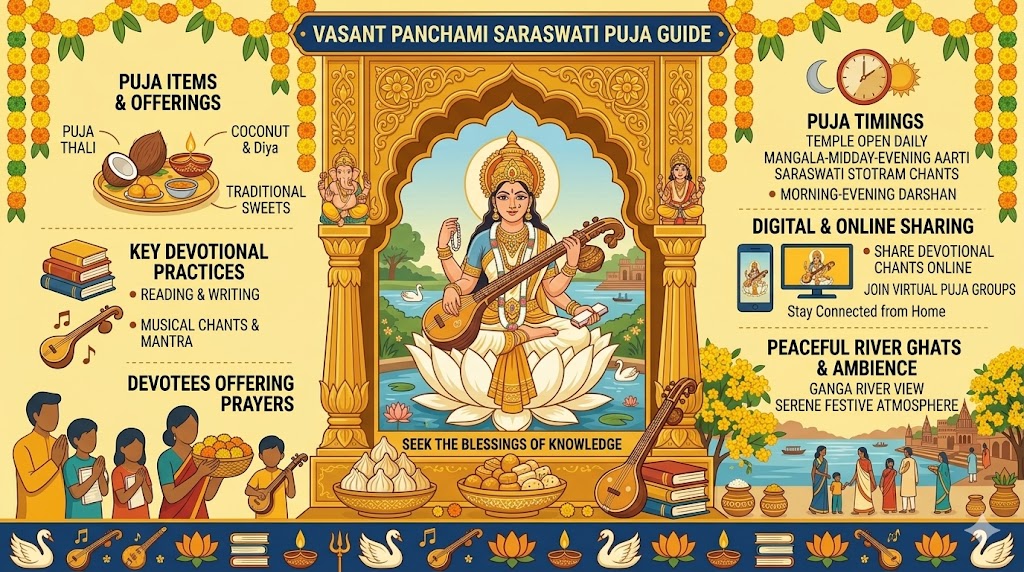
The Vasant Panchami Puja Vidhi is an important ritual performed to worship Goddess Saraswati, the deity of knowledge, wisdom, and arts. Celebrated on the fifth day of the Magha month, this festival marks the arrival of spring and is considered highly auspicious for students, artists, and scholars. On this day, devotees perform Saraswati Puja with devotion, seeking blessings for education, creativity, and success. The rituals include setting up the idol or image of Goddess Saraswati, offering yellow flowers, performing aarti, and chanting mantras. Moreover, yellow colour holds special significance during Vasant Panchami, symbolising energy and prosperity. Therefore, devotees wear yellow clothes and prepare yellow sweets as part of the celebration. In this guide, you will learn the Vasant Panchami Puja vidhi step-by-step, required items list, rituals, and important tips to perform the puja correctly at home.
Vasant Panchami Puja Vidhi
The Vasant Panchami Puja Vidhi involves simple yet meaningful rituals that can be performed at home.
Vasant Panchami Puja Items List
Before starting the puja, arrange the following items:
- Idol or picture of Goddess Saraswati
- Yellow flowers
- Turmeric (Haldi)
- Kumkum
- Akshat (rice grains)
- Incense sticks (Agarbatti)
- Diya (lamp) with oil or ghee
- Fruits and sweets (preferably yellow)
- Books and musical instruments (for blessing)
- Betel leaves and nuts
- Gangajal (holy water)
Therefore, keeping all items ready ensures smooth puja.
Step-by-Step Vasant Panchami Puja Procedure
1. Preparation
Clean the house and puja area. Place the idol of Goddess Saraswati on a clean platform.
2. Sankalp (Resolution)
Take a vow to perform the puja with devotion and sincerity.
3. Kalash Sthapana
Place a Kalash filled with water and decorate it with mango leaves and coconut.
4. Invocation of Goddess Saraswati
Offer flowers and chant Saraswati mantras.
5. Offerings (Naivedyam)
Offer fruits, sweets, and yellow dishes to the goddess.
6. Books and Instruments Puja
Place books, pens, and instruments near the deity for blessings.
7. Aarti
Perform aarti and pray for knowledge and wisdom.
8. Prasad Distribution
Distribute prasad among family members.
Significance of Vasant Panchami Puja
The Vasant Panchami Puja Vidhi holds great spiritual importance.
- Worship of Goddess Saraswati
- Beginning of spring season
- Auspicious for starting education
- Symbol of knowledge and creativity
Moreover, many children begin their learning journey (Vidyarambham) on this day.
Importance of Yellow Colour
Yellow is the primary colour of Vasant Panchami.
- Symbolises energy and positivity
- Represents prosperity and growth
- Associated with mustard flowers blooming in spring
Therefore, devotees wear yellow clothes and offer yellow sweets.
Do’s and Don’ts
Do’s
- Perform puja in a clean environment
- Wear yellow or light-coloured clothes
- Chant Saraswati mantras
Don’ts
- Avoid non-vegetarian food
- Do not disrespect books or instruments
- Avoid negative thoughts
FAQ – Vasant Panchami Puja Vidhi
1. What is Vasant Panchami?
It is a Hindu festival dedicated to Goddess Saraswati, marking the arrival of spring.
2. Which goddess is worshipped?
Goddess Saraswati is worshipped for knowledge and wisdom.
3. What colour should be worn?
Yellow is considered the most auspicious colour.
4. Can students perform this puja?
Yes, students are especially encouraged to perform Saraswati Puja.
5. What is the best time for puja?
Morning time during Panchami tithi is considered ideal.
External Official Links
https://www.india.gov.in
https://www.incredibleindia.org
Important Tips for Visitors
- Carry sufficient cash — ATMs near temple towns may run out during peak festival periods.
- Book accommodation well in advance — rooms fill up quickly during festival season.
- Check the exact festival dates on the official temple website as lunar calendar dates may shift.
- Be prepared for long queues and allocate extra time for darshan during festivals.
Official Resources

V S Anantha Sharma is a Senior Content Researcher at Go Kshetra with over 20 years of experience in Indian archaeology, temple architecture, and Hindu pilgrimage traditions. A lifelong devotee and...
Go Kshetra covers 1,600+ Hindu temples across 28 states. Content sourced from official temple websites and first-hand visits. About our editorial process